At a home insurer, the claim is the moment of truth. That is when the customer finds out what the policy is worth. And that is often when they decide to leave.
Where it started
The insurer handled 150,000 claims a year, along a path of 5 steps: notification, assessment, survey, settlement, closure. 200 handlers did it by hand, with aging tools.
Average handling time was 21 days. Customers expected 7. Claims satisfaction topped out at 55%, and 40% of the customers who left cited the claim as the reason for cancelling.
What was actually stuck
- Everything went through the same path. A low-value water-damage claim followed the same route as a complex claim.
- A field survey was systematic. One was sent on 60% of claims, 30% of which did not justify it.
- The customer was in the dark. No news during handling, so calls, chasers and irritation.
What we put into production
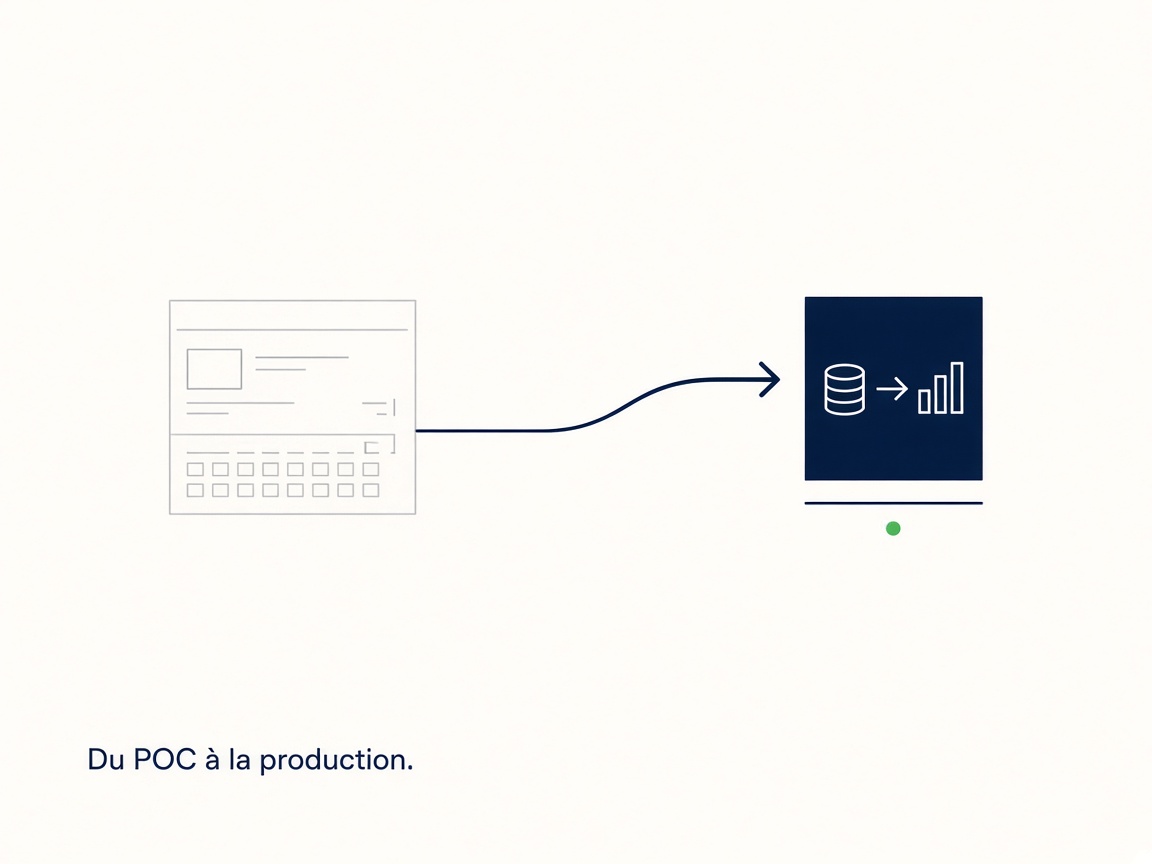
In 5 months, an AI system went into production on simple claims, 40% of the volume:
- Automatic triage: each notification is classified and routed to the right path (express, standard or expert).
- A damage estimate from the photos, for the files that lend themselves to it. The field survey is kept for the cases that justify it.
- Updates sent to the customer at each step, on the channel they prefer.
- A claims dashboard: times, satisfaction, cost by type of claim.
The foundations are standardized (about 70% of the work); the rest belongs to the insurer's own business.
The result
- Handling time: from 21 to 5 days.
- Claims satisfaction: +25 points.
What to remember
The gain does not come from a spectacular model. It comes from a simple decision: separate what is simple from what is complex, and give the handler back the time spent on files that did not need them.
And once it is in production, the system has to be operated: watched, measured, adjusted. That is why we work to a defined scope, with a RUN under an SLA, rather than in man-days.
Are your claim times longer than your customers will accept? Let's talk about your path: the contact page.